

Smart Home Design with Integrated Technology: Revolutionizing Modern Living
Share this:
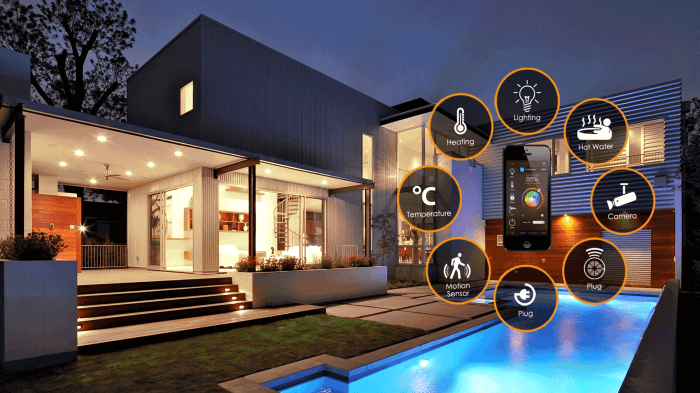
Embark on a journey into the future with Smart Home Design with Integrated Technology leading the way. Discover how the fusion of design and technology is reshaping our homes, making them more convenient and efficient than ever before.
Explore the seamless integration of technology into every aspect of home design, from layout to automation, and uncover the endless possibilities that come with it.
Smart home design concepts
Smart home design with integrated technology refers to the use of automated systems and devices to control various aspects of a home, such as lighting, heating, security, and entertainment, among others. These systems are interconnected and can be accessed and controlled remotely through smartphones or voice commands.Incorporating technology into home design offers numerous benefits.
One of the key advantages is increased convenience. For example, homeowners can adjust the temperature, turn off lights, or lock doors with a simple voice command or a tap on their smartphone. This level of control and automation can streamline daily tasks and make life easier for residents.Furthermore, smart home design enhances efficiency by optimizing energy usage and reducing waste.
For instance, smart thermostats can learn the household's schedule and adjust the temperature accordingly, leading to energy savings. Similarly, smart lighting systems can automatically turn off lights in unoccupied rooms, saving electricity.
Enhanced Security and Monitoring
Smart home design also offers enhanced security features, such as surveillance cameras, motion sensors, and smart locks. Homeowners can monitor their property in real-time, receive alerts about suspicious activities, and even remotely grant access to trusted individuals. This added layer of security provides peace of mind and ensures the safety of the residents and their belongings.
Integrated technologies in smart homes
Smart homes today are equipped with a variety of integrated technologies that work together to enhance convenience, efficiency, and security for homeowners. From smart lighting to automated climate control systems, these technologies are shaping the way we live and interact with our living spaces.
Key technologies commonly integrated into smart home designs
- Smart Lighting: LED lights that can be controlled remotely via smart devices to adjust brightness, color, and scheduling.
- Smart Thermostats: Devices that regulate home temperature based on user preferences and patterns, optimizing energy usage.
- Smart Security Systems: Cameras, motion sensors, and smart locks that provide real-time monitoring and alerts for enhanced home security.
- Voice Assistants: Virtual assistants like Amazon Alexa and Google Assistant that allow users to control various devices through voice commands.
Comparison of different smart devices used in modern smart homes
- Smart Speakers: Devices like Amazon Echo and Google Home that serve as central hubs for controlling other smart devices and accessing information.
- Smart Cameras: Security cameras with features like facial recognition, night vision, and cloud storage for video footage.
- Smart Appliances: Refrigerators, ovens, and washing machines that can be controlled remotely and provide notifications for maintenance or usage.
Role of artificial intelligence in enhancing smart home technology
Artificial intelligence (AI) plays a crucial role in smart home technology by enabling devices to learn user behaviors, adapt to preferences, and automate tasks effectively. AI algorithms analyze data from various sensors and devices to optimize energy usage, enhance security protocols, and provide personalized experiences for homeowners.
With AI integration, smart homes can continuously improve and evolve to meet the changing needs and lifestyles of residents.
Designing a smart home layout
When it comes to designing a smart home layout, there are several key factors to consider in order to optimize technology integration and create a seamless blend of functionality and aesthetics
Tips for designing a layout that optimizes technology integration
- Consider the placement of technology hubs and devices to ensure optimal connectivity throughout the home.
- Integrate smart home features into the design early on to avoid retrofitting and ensure a cohesive look.
- Plan for automation and control systems to be easily accessible and user-friendly for all occupants.
- Incorporate wireless technology and smart sensors to minimize visible wiring and maximize flexibility.
Importance of planning for future technological advancements in home design
Anticipating future technological advancements is crucial when designing a smart home layout. By incorporating flexible infrastructure and scalable systems, homeowners can easily adapt to new technologies as they emerge without the need for major renovations.
Examples of innovative layouts that seamlessly blend technology with aesthetics
One example of an innovative layout is a smart kitchen that features integrated appliances, touchless faucets, and voice-activated controls for lighting and music. Another example is a smart living room with hidden speakers, motorized shades, and a central control panel for all connected devices.
Automation and control systems
Automation in smart homes refers to the ability of devices and systems to perform tasks automatically, without the need for manual intervention. This can include controlling lighting, temperature, security systems, and even appliances based on preset conditions or schedules. The impact of automation on daily living is significant, as it enhances convenience, efficiency, and comfort for occupants.
Types of control systems for managing smart home devices
There are different types of control systems that can be used to manage smart home devices:
- Centralized control systems: These systems utilize a central hub or controller to manage all connected devices from one place. This allows for seamless integration and control of various devices through a single interface.
- Voice-activated control systems: With the rise of voice assistants like Amazon Alexa and Google Assistant, users can now control their smart home devices using voice commands. This hands-free approach adds a layer of convenience to home automation.
- Mobile app-based control systems: Many smart home devices come with dedicated mobile apps that allow users to control and monitor their devices remotely. These apps offer flexibility and accessibility, enabling users to manage their homes from anywhere.
The importance of user-friendly interfaces in smart home control systems
User-friendly interfaces are essential in smart home control systems to ensure ease of use and accessibility for all occupants. A well-designed interface should be intuitive, responsive, and visually appealing, making it easy for users to navigate and control their smart devices.
A user-friendly interface enhances the overall user experience, encouraging more people to adopt and embrace smart home technology in their daily lives.
Ultimate Conclusion
As we wrap up our discussion on Smart Home Design with Integrated Technology, it's clear that the future of living spaces is here. With innovation at its core, the blend of design and technology promises a lifestyle of unparalleled comfort and sophistication.
Questions and Answers
How does smart home design enhance convenience and efficiency?
Smart home design integrates technology to automate tasks, improve energy efficiency, and enhance security, making daily life more convenient and efficient.
What are some key technologies commonly integrated into smart home designs?
Commonly integrated technologies in smart homes include smart lighting, thermostats, security cameras, voice assistants, and smart appliances.
Why is it important to plan for future technological advancements in home design?
Planning for future advancements ensures that your smart home remains up-to-date and can easily adapt to new technologies without major renovations.